
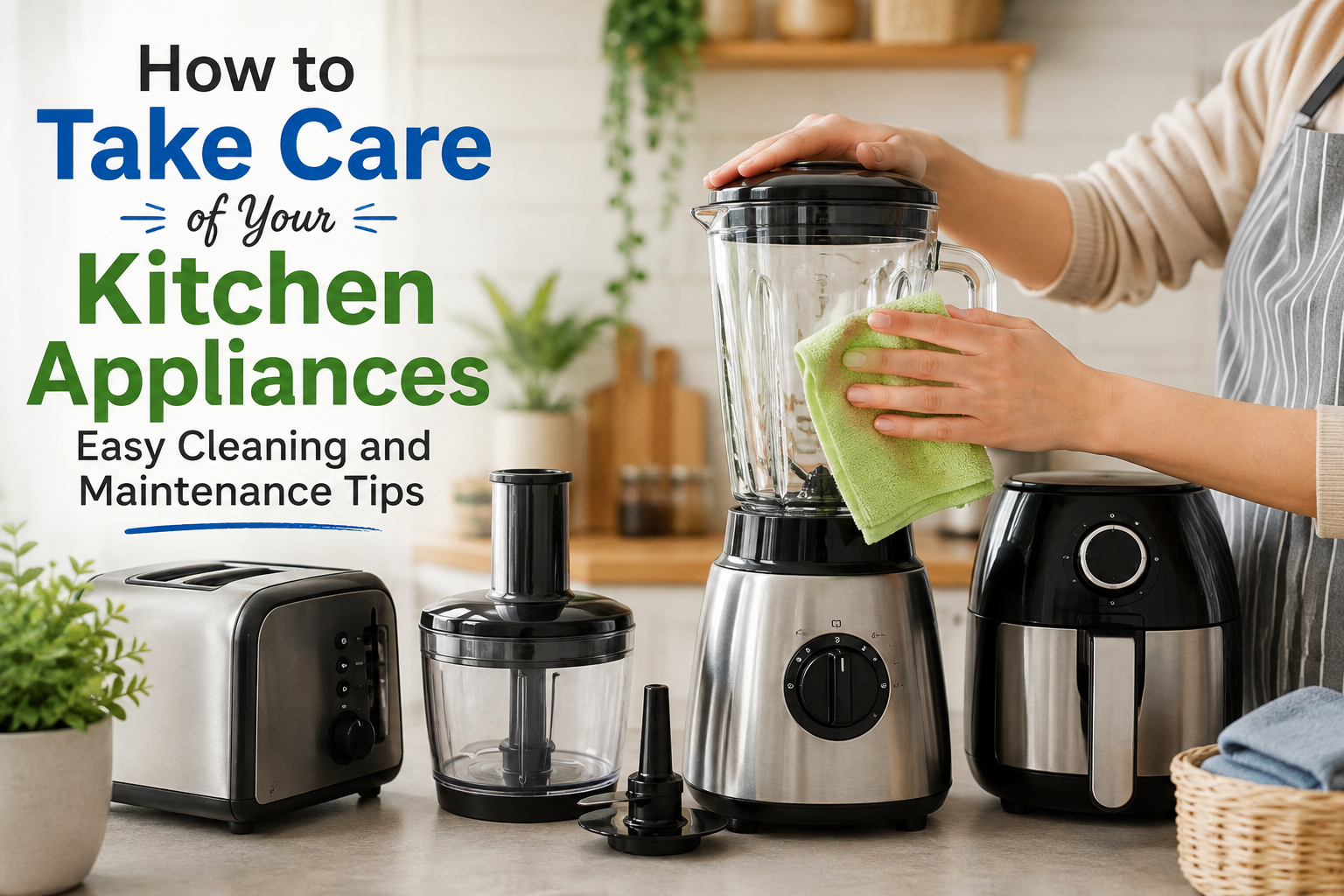
How to Take Care of Your Kitchen Appliances: Easy Cleaning and Maintenance Tips
Kitchen appliances make our everyday lives easier. From preparing a quick breakfast to blending smoothies, grinding ingredients, heating food, or preparing meals for the whole family, these appliances help us save both time and effort.
However, buying a good kitchen appliance is only the first step. To keep it working properly for a long time, regular cleaning and proper maintenance are equally important.
Many people use their appliances every day but forget to clean them correctly or check them regularly. Food particles, moisture, grease, dust, and improper usage can affect the performance and lifespan of an appliance. Fortunately, taking care of your kitchen appliances does not have to be difficult.
A few simple habits can help keep your appliances clean, safe, and ready for everyday use.
In this blog, we will share easy cleaning and maintenance tips to help you take better care of your kitchen appliances.
1. Always Read the User Manual
One of the easiest ways to take proper care of any kitchen appliance is to read the user manual before using it.
Every appliance is designed differently. The cleaning instructions for a personal blender may be different from those for a mixer grinder, microwave, toaster, or food processor.
The user manual can provide useful information about:
- How to operate the appliance safely
- Which parts can be removed
- How to clean different components
- Whether certain parts are dishwasher-safe
- Recommended usage time
- Safety precautions
- Maintenance instructions
Following the manufacturer’s instructions can help prevent accidental damage and ensure that the appliance performs as expected.
If you no longer have the printed manual, many brands provide product information and support online.
2. Clean Your Appliances After Regular Use
One of the most important habits for maintaining kitchen appliances is regular cleaning.
Food particles, liquids, oil, and other residue can build up over time. If left uncleaned, they may cause unpleasant smells, stains, or affect the hygiene of the appliance.
For appliances such as blenders and food processors, it is usually easier to clean them soon after use.
For example, after preparing a smoothie, rinse the jar as soon as possible. This can prevent ingredients from drying and sticking to the surface.
A simple routine can include:
- Switch off and unplug the appliance.
- Allow it to cool down if necessary.
- Remove detachable parts.
- Clean the removable components according to the manufacturer’s instructions.
- Wipe the main body with a clean, slightly damp cloth.
- Allow all parts to dry completely before reassembling.
Never immerse the motor base or electrical components in water unless the manufacturer specifically states that it is safe to do so.
3. Always Unplug Before Cleaning
Safety should always come first.
Before cleaning, assembling, disassembling, or inspecting an electrical kitchen appliance, make sure it is switched off and unplugged from the power source.
This is especially important when dealing with appliances that have:
- Sharp blades
- Heating elements
- Electrical connections
- Moving parts
Do not pull the appliance from the cord when unplugging it. Instead, hold the plug firmly and remove it carefully from the socket.
Also, make sure your hands are dry before touching electrical plugs or switches.
These small precautions can help reduce the risk of accidents and protect both you and your appliance.
4. Take Special Care of Blender and Mixer Blades
Blades are an important part of many kitchen appliances, including personal blenders, mixer grinders, and food processors.
Sharp blades can become damaged if they are handled roughly or cleaned incorrectly.
When cleaning blades:
- Handle them carefully.
- Avoid touching the sharp edges directly.
- Use a soft brush if needed.
- Remove food particles carefully.
- Dry them properly after washing.
- Check for visible damage before use.
Do not use damaged or bent blades.
If the appliance allows the blade assembly to be removed, follow the manufacturer’s instructions carefully while removing and reattaching it.
Proper care of blades can help maintain efficient blending and grinding performance.
5. Keep the Motor Base Dry
The motor base is the heart of many kitchen appliances. It contains the electrical and mechanical components that power the appliance.
Unlike removable jars or containers, the motor base should generally not be placed directly under running water.
Instead, clean the exterior using a soft, slightly damp cloth.
Make sure that water does not enter:
- Switches
- Buttons
- Electrical connections
- Ventilation openings
After wiping, allow the appliance to dry completely before connecting it to a power source.
Keeping the motor base dry and clean can help protect the internal components and maintain reliable performance.
6. Avoid Overloading Your Appliance
One common mistake that can affect the lifespan of kitchen appliances is overloading.
Every appliance has a recommended capacity. Adding too many ingredients or exceeding the recommended amount can put extra pressure on the motor and other components.
For example, when using a blender, avoid filling the jar beyond the recommended level.
If you need to prepare a large quantity, divide the ingredients into smaller batches.
Overloading may cause:
- Reduced performance
- Uneven blending
- Motor strain
- Excessive vibration
- Overheating
Using the appliance within its recommended capacity can help improve performance and reduce unnecessary stress on the machine.
7. Do Not Run Appliances for Too Long
Kitchen appliances are designed for specific types of usage. Running them continuously for longer than recommended may cause overheating.
If you are blending, grinding, or processing ingredients for an extended period, follow the recommended operating time mentioned in the product instructions.
If the appliance becomes unusually hot, stop using it and allow it to cool down.
Repeated overheating can affect the motor and may reduce the overall lifespan of the appliance.
Using short intervals when necessary can help maintain better performance.
8. Check Cords and Plugs Regularly
The power cord and plug are important parts of any electrical appliance.
Check them regularly for signs of:
- Cracks
- Cuts
- Loose connections
- Exposed wires
- Burn marks
Never use an appliance with a damaged power cord or plug.
Avoid placing heavy objects on electrical cords or bending them sharply.
When storing the appliance, loosely arrange the cord instead of wrapping it tightly around the appliance unless the product is specifically designed for cord storage.
Taking care of the power cord can help improve safety and prevent unnecessary damage.
9. Remove Food Residue Carefully
Food residue can build up in small corners, around lids, seals, blades, and other detachable parts.
Cleaning these areas regularly is important for hygiene and proper performance.
Pay attention to:
- Jar lids
- Rubber seals
- Blade areas
- Handles
- Small openings
- Detachable attachments
Use a soft cloth or brush to clean difficult areas.
Avoid using very harsh cleaning tools that may scratch the surface of the appliance.
If food residue is difficult to remove, follow the cleaning instructions recommended for that specific appliance instead of using excessive force.
10. Use the Right Cleaning Products
Strong chemicals and abrasive cleaning materials can damage the surface of some appliances.
Whenever possible, use mild cleaning products suitable for kitchen appliances.
Avoid using rough metal scrubbers on plastic, coated, or polished surfaces unless specifically recommended by the manufacturer.
A soft sponge or cloth is often sufficient for regular cleaning.
Before using any cleaning product, check whether it is suitable for the material of your appliance.
Using gentle cleaning methods can help keep your appliance looking clean without damaging its finish.
11. Dry All Parts Properly
After washing removable components, make sure they are completely dry before storing or reassembling them.
Moisture trapped inside jars, lids, or storage areas may cause unpleasant smells or other hygiene issues.
Allow washed parts to air dry naturally when possible.
Before storing:
- Check that jars are dry.
- Wipe lids properly.
- Ensure seals are free from moisture.
- Keep electrical components completely dry.
Proper drying is a simple but important part of appliance maintenance.
12. Store Appliances in a Clean and Dry Place
Where you store your kitchen appliances can also affect their condition.
Store appliances in a clean and dry area away from excessive moisture, heat, or direct water exposure.
Before storing an appliance for a long period:
- Clean all removable parts.
- Allow everything to dry completely.
- Store accessories together.
- Keep the appliance away from children when necessary.
- Protect the cord from damage.
If you use an appliance frequently, keeping it in an accessible location can make daily use easier.
For appliances used occasionally, proper storage can help keep them clean and protected.
13. Avoid Using Appliances for Tasks They Are Not Designed For
Every appliance has a specific purpose.
Using an appliance for ingredients or tasks that it is not designed to handle may cause damage.
For example, do not assume that every personal blender is suitable for heavy-duty grinding. Similarly, an appliance designed for light blending may not be suitable for extremely hard ingredients.
Before using an appliance for a new task, check the product instructions.
Using the appliance according to its intended purpose can help maintain performance and prevent unnecessary wear and tear.
14. Keep Air Vents Clear
Some appliances have ventilation openings to help prevent the motor from overheating.
Dust and debris can sometimes collect around these areas.
Check the exterior of your appliance regularly and gently clean visible dust.
Do not insert sharp objects into ventilation openings.
Keeping these areas clean can support proper airflow and help the appliance operate efficiently.
15. Do Not Ignore Unusual Sounds or Smells
If your appliance starts making unusual noises, vibrating excessively, producing a burning smell, or showing any other unexpected behaviour, stop using it immediately.
Continuing to operate a malfunctioning appliance may cause further damage.
Check the user manual for troubleshooting guidance or contact the manufacturer’s customer support.
Avoid attempting complicated repairs yourself unless you are qualified to do so.
Professional servicing or authorized support may be necessary for electrical or mechanical problems.
16. Replace Worn or Damaged Parts When Needed
Over time, some parts of kitchen appliances may show signs of wear.
Depending on the appliance, these may include:
- Seals
- Lids
- Jars
- Attachments
- Blade assemblies
If a removable part becomes damaged, replace it with a suitable part recommended by the manufacturer.
Using incorrect or incompatible accessories may affect the performance or safety of the appliance.
Regularly checking the condition of important components can help you identify problems early.
17. Use Appliances on a Stable Surface
Always place your appliance on a stable, flat surface before using it.
Avoid placing electrical appliances near the edge of the kitchen counter.
For appliances that create vibration, make sure the base is stable and positioned correctly.
A clean and dry work surface can also help improve safety.
Keep the area around the appliance free from unnecessary clutter, especially while blending, chopping, grinding, or using heat-generating appliances.
18. Create a Simple Maintenance Routine
The easiest way to keep your appliances in good condition is to create a regular maintenance routine.
You do not need to spend hours maintaining your appliances.
A simple schedule can help:
After Every Use
- Clean removable parts.
- Wipe the appliance exterior.
- Check for food residue.
- Dry everything properly.
Once a Week
- Inspect lids and seals.
- Clean difficult-to-reach areas.
- Wipe the power cord.
- Remove dust from the appliance exterior.
Once a Month
- Check for visible damage.
- Inspect the power cord and plug.
- Check blades and attachments.
- Make sure the appliance is operating normally.
This simple routine can help you identify small issues before they become bigger problems.
19. Teach Everyone in the Home How to Use Appliances Properly
If multiple people in your household use the same kitchen appliances, make sure everyone understands the basic operating and safety instructions.
Improper usage can lead to accidental damage.
Simple instructions such as not overloading a blender, unplugging after use, and keeping the motor base dry can help protect the appliance.
If children use kitchen appliances, adult supervision may be necessary depending on the appliance and their age.
20. Invest in Quality and Take Care of It
A good kitchen appliance can make everyday tasks easier, but regular care plays a major role in how long it continues to perform well.
Choosing a product with practical features, durable materials, and easy-to-clean components can make maintenance simpler.
At Jashan, we believe that everyday kitchen appliances should be practical, convenient, and easy to maintain. By following simple cleaning and maintenance habits, you can help keep your appliances ready for your daily kitchen routine.
Final Thoughts
Taking care of your kitchen appliances does not require complicated methods. Regular cleaning, correct usage, proper storage, and basic safety checks can make a significant difference.
Remember these simple rules:
- Always follow the manufacturer’s instructions.
- Unplug appliances before cleaning.
- Keep electrical components dry.
- Do not overload the appliance.
- Clean food residue after use.
- Handle blades carefully.
- Check cords and plugs regularly.
- Store appliances in a clean and dry place.
- Stop using appliances if you notice unusual sounds, smells, or damage.
By making appliance care part of your regular kitchen routine, you can help maintain cleanliness, improve safety, and support the long-term performance of your favourite kitchen tools.
A little care after every use can go a long way. Keep your kitchen appliances clean, use them correctly, and enjoy a smoother and more convenient cooking experience every day.
Explore Jashan kitchen appliances and discover practical solutions designed to make everyday kitchen tasks easier.



Add comment